

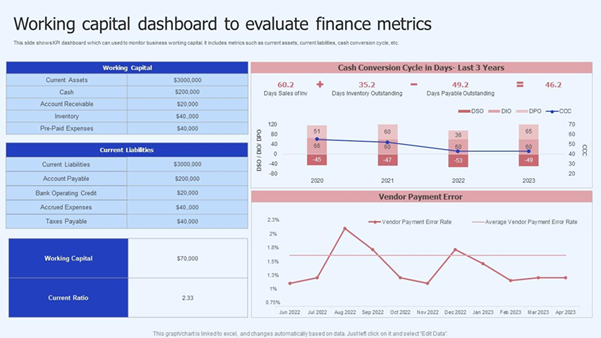
A mid-sized industrial components manufacturer based in Pune, India, with annual revenue of ₹320 crore, faced increasing pressure on working capital. Despite strong sales growth, the company’s Days Sales Outstanding (DSO) had expanded from 62 days to 108 days over three years.
Delayed collections resulted in:
- Liquidity stress
- Increased reliance on working capital loans
- Rising finance costs
- Weak negotiation power with suppliers
The management engaged Finvigil Insights Pvt. Ltd. to implement a Receivables Optimization Program.
Key Issues Identified
Finvigil’s diagnostic review revealed several structural weaknesses:
- Absence of a receivables monitoring framework
- Unstructured credit approval process
- Limited follow-up mechanisms for overdue accounts
- High exposure to few large distributors
- No early warning indicators
Finvigil Intervention Framework
Finvigil implemented a structured receivables management model built around four pillars:
Pillar | Action |
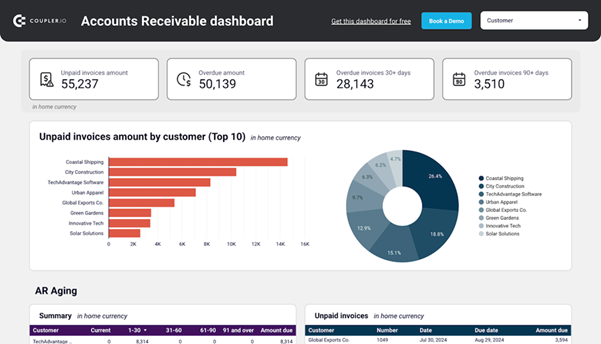
Data Visibility | Deployment of automated aging dashboards |
Credit Discipline | Revised credit limits linked to payment history |
Collection Governance | Weekly receivables review meetings |
Risk Monitoring | Early warning indicators for payment delays |
Key tools deployed included:
- Receivables Aging Dashboard
- Collection Priority Matrix
- Customer Payment Behaviour Index
Results Achieved
Within 9 months, the company achieved measurable improvement.
Metric | Before | After |
DSO | 108 days | 64 days |
Overdue Receivables | ₹72 Cr | ₹24 Cr |
Working Capital Released | – | ₹48 Cr |
Bad Debts | ₹8.4 Cr | ₹2.1 Cr |
Strategic Insight
Receivables management is not merely a finance function—it is a strategic capability linking sales growth with financial discipline.
Companies that actively manage receivables typically achieve:
- Higher liquidity resilience
- Lower borrowing costs
- Improved credit risk control